

UNDERSTANDING THE APPROACHFunctional Laboratory Testing
Functional Laboratory Testing is an advanced assessment approach that provides deeper insight into various aspects of health and wellness. Functional testing helps provide a more detailed picture of how different systems within the body may be functioning and can assist in developing more personalized recommendations.
When Is Functional Testing Recommended?
Functional testing may be considered when:
✔ Symptoms are complex or long-standing
✔ Progress has stalled despite appropriate interventions
✔ Additional information is needed to guide recommendations
✔ Deeper investigation is warranted
✔ Conventional testing has not provided sufficient answers
The decision to pursue functional testing is always individualized and based on your unique health history, symptoms, and goals.


Types Of Functional Testing
-
The GI-MAP is a comprehensive stool analysis designed to provide insight into digestive health and the gut microbiome.
Areas evaluated may include:
✔ Microbial balance
✔ Digestive function
✔ Inflammatory markers
✔ Immune activity
✔ Potential pathogens
✔ Gut barrier health
-
The DUTCH Test provides a detailed look at hormone patterns and metabolism.
It may provide insight into:
✔ Cortisol patterns
✔ Stress resilience
✔ Estrogen metabolism
✔ Progesterone balance
✔ Testosterone metabolism
✔ Hormonal wellness
-
The Organic Acids Test evaluates metabolic byproducts found in urine and may provide information about:
✔ Energy production
✔ Nutrient status
✔ Oxidative stress
✔ Detoxification pathways
✔ Digestive health
✔ Metabolic function
-
Food sensitivity testing may be considered when dietary triggers are suspected and additional information is needed to support nutritional recommendations.
-
Nutrigenomic testing explores how genetic variations may influence nutritional requirements, detoxification pathways, metabolism, and overall wellness.
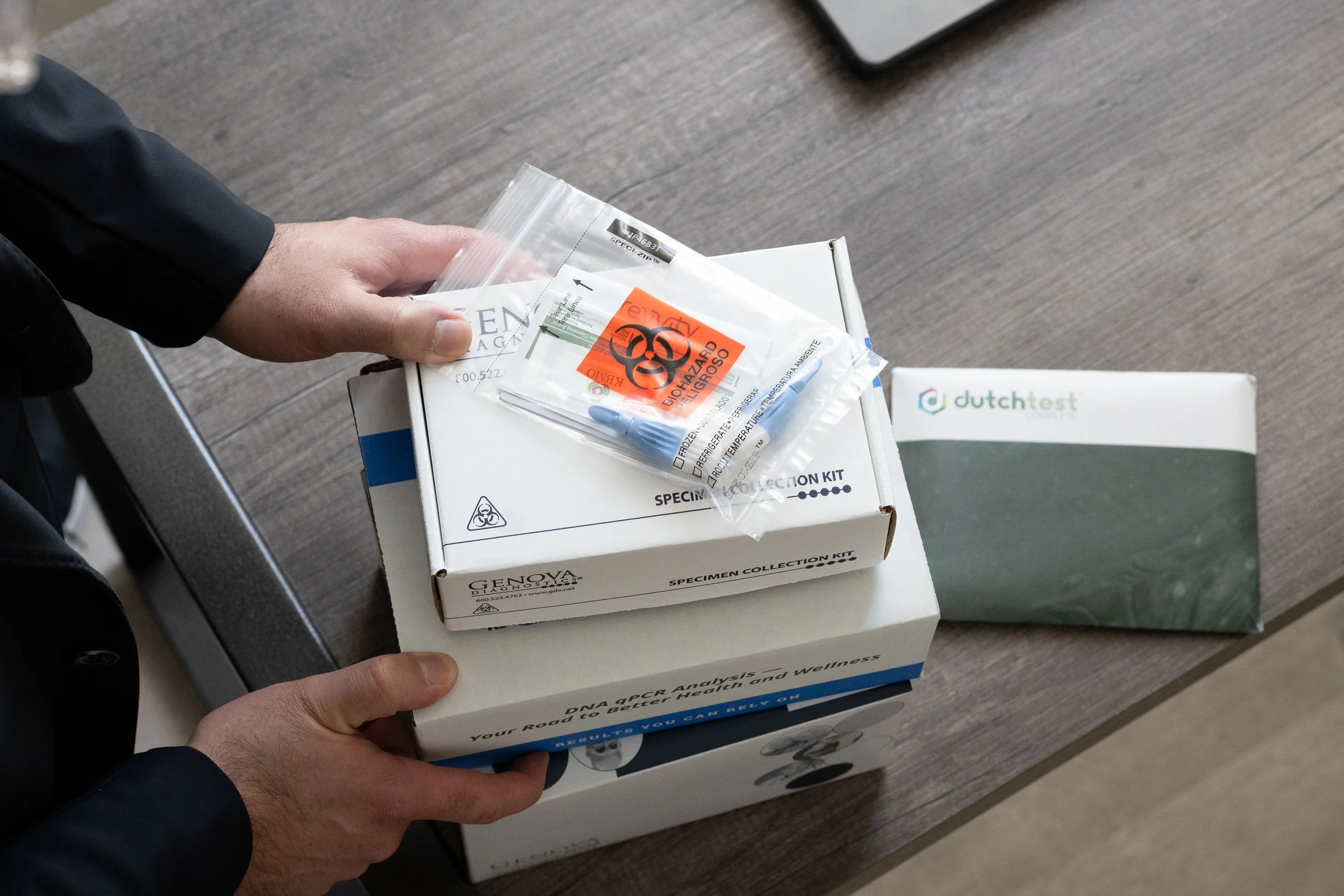
How Functional Testing Is Used at The Nutrition Lab
Functional testing is never interpreted in isolation. Results are reviewed alongside:
✔ Health History
✔ Symptom Timeline
✔ Nutribody Symptomatology Assessment
✔ Bloodwork
✔ BioEnergetic Assessment
✔ Live Blood Cell Analysis
✔ Lifestyle Factors
By integrating information from multiple sources, a more complete understanding of health can be developed, and recommendations can be tailored to the individual.
Why Functional Testing Matters
The purpose of functional testing is not simply to collect data.
The goal is to gain meaningful insight that can help answer important questions such as:
Why are symptoms occurring?
What systems may require support?
What factors could be contributing to ongoing health challenges?
How can recommendations be better personalized?
When used appropriately, functional testing can become a valuable component of a comprehensive root-cause approach to health.


FAQ'SFrequently Asked Questions
-
No. Many clients achieve significant improvements through nutrition, lifestyle modifications, symptom analysis, BioEnergetic assessments, and bloodwork review alone. Functional testing is recommended only when additional information is needed.
-
Functional testing is used to provide additional information about physiological function and wellness. It should not be used as a substitute for medical diagnosis or treatment.
-
The most appropriate test depends on your health history, symptoms, goals, and assessment findings. Recommendations are made on an individual basis.
-
Not necessarily. Some clients require no functional testing, while others may benefit from one or more tests depending on the complexity of their health concerns.
-
This is determined during your Comprehensive Health Assessment. Based on your health history, symptoms, bloodwork, and assessment findings, recommendations will be made regarding whether additional testing may be beneficial.